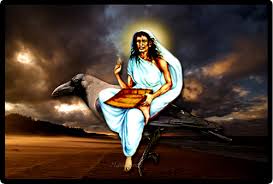
Dhumavati Celebration

Dhumavati is described as a giver of siddhis (supernatural powers), a rescuer from all troubles, and a granter of all desires and rewards, including ultimate knowledge and moksha (salvation).

5718791841

Dhumavati personifies the dark side of life, her name meaning “she who is made of smoke.” Smoke is a side effect of fire which is dark, polluting, and concealing. It is emblematic of the worse facets of human existence, these concepts are very ancient referring to keeping life’s inevitable suffering at bay. Generally represented by a crow, a symbol of loss, destruction, decay, and misfortune.

From her we can look at two ideas; one being unpleasant experiences will eventually result in a disgust that will turn us towards the divine, the other being the divine is everywhere – even what we ordinarily consider ugly or foul. All goddesses hold wisdom, Dhumavati shows us their should be a practical insight that the infinite Mother is everywhere.

How many times have you thought something was horrible then a day, a month, a few years later it ended up being a blessing in disguise? Misfortune may always appear different in retrospect. Adversity builds character and can turn an ordinary soul into an extraordinary one. Inevitably, the ebb and flow of ups and downs will continue as time goes on. Use today in representation of her as a lesson to cultivate detachment, seek hidden blessings, and continue the path to liberation.  Dhumavati’s worship is prescribed to ward off all the negativity that she stands for and to transcend the smoke screen to acquire true knowledge.

Goddess-Dhumavati-Mantra-The-Smoky-One

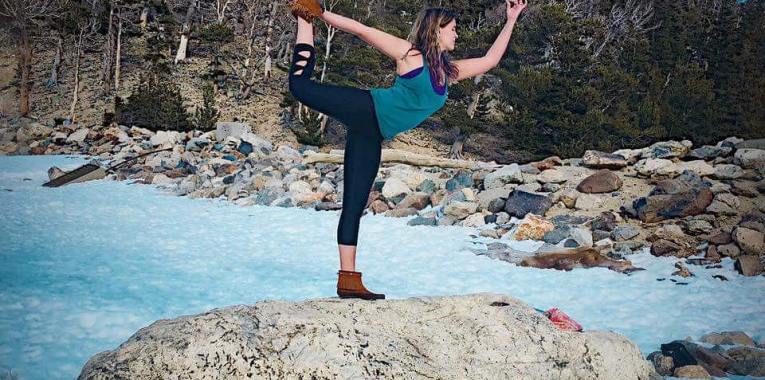
Nataranjasana

Natarajasana, Lord of the Dance Pose.
Nata means “dancer”, raja means “king”, and asana means “posture”. Nataraja was a name given to the Hindu God Shiva, the great destroyer, in his form as the cosmic dancer.

I have always been in love with dance and utilizing different ways of movement to express myself. Breathing in this pose feels so right. Natarajasana stretches the shoulders, chest, thigh, groins, and abdomen. It strengthens the legs and ankles while improving balance.  This pose is an opportunity to cultivate an ability to shift out of the multi-tasking mentality the world seems to demand and move into this essential, centralized energy and space.

Looking to open and balance some of your chakras? This pose is great for encouraging love, personal power, and creativity by activating the heart, solar plexus, and sacral chakras.

Natarajasana is metaphorically dancing through our samsaras. Why is it that we refuse at times to see ourselves as divine beings?

This pose requires and builds full-body strength, flexibility, and coordination. Do not do this pose if you have an ankle, knee or low back injury, are currently experiencing low blood pressure, dizziness, migraines, or insomnia. So how do you get into it?

1. Begin in Tadasana (Mountain Pose)
2. Shift your weight to your left foot
3. Bend right leg to bring right heel toward sit bone
4. Draw the knees together and scoop the tailbone down while hugging the mid-line with both thighs
5. Raise your right arm up overhead while simultaneously kicking the right foot high to the sky connecting the right hand to the inside of your foot. If it’s available raise your left hand to meet your right foot as well, otherwise let it float, palms up in front of you.
6. Pull right ribs and hip forward while drawing in your right shoulder socket – working to square off the torso to the front
7. Lift through your heart, draw your belly in, and continue to hug towards the mid-line
8. Allow your drishti to be at the middle finger of your left hand (about third eye level)
… And now just breath. (Don’t forget to do the other side!)

Modifications:

  • Bow a the waist reaching heart forward
  • Holding toe of back foot pull elbow up with arm now reaching back over side of head
  • Use a strap wrapped around top of foot of lifted leg
  • For gentle variation stand with a wall 2 feet in front of you to balance

Utilize this pose to dance through your own samsaras, recognize what kleshas you fall in to and how to move through them. Not sure what a klesha is? Stay tuned … 🙂

Why Yoga Nidra?

“Relaxation means to be blissfully happy, It has no end.” 
-Swami Satyananda Saraswati

When you hear the word “Yoga” you often imagine a body contorting into different positions. While yoga is so much more than that. There are seven limbs of yoga that aren’t physical movement at all.

Yoga Nidra is a practice of healing on the physical, mental, and emotional levels without ‘physical’ movement. It is using this technique that teaches one to relax consciously. True relaxation is an experience you have never felt until you’ve tried Yoga Nidra. It opens deeper phases of your mind, unloading the subconscious and unconscious mind, the most powerful forces in the human being.

brain-waves-the-one_origHarvesting a witness awareness helps one become less reactive to situational experiences. This is practiced by the practitioner guiding you from alpha to beta to theta to delta brain waves. Delta is generally defined as the brain wave you experience while sleeping, however, with Yoga Nidra the delta waves are responding in a conscious sleep. Once you are consciously sleeping you can program your mind with a sankalpa or resolve. A sankalpa is a present tense affirmation or saying such as “I healthy and happy” or “I participate in activities that nourish my mind and strengthen my will”.  Yoga Nidra is a process to manifest your wants or needs into fruition at an exponential rate.

Benefits?

  • Lowers Stress
  • Lowers Anxiety
  • Lowers Blood Pressure
  • Lowers risk of Heart Disease
  • Lowers asthma symptoms
  • Enhances memory and learning ability
  • Awakens creativity
  • Manages psychological disorders
  • Manages psychosomatic diseases
  • Helps with addiction
  • Helps with PTSD
  • 1 hour of Yoga Nidra is equal to 3 hours of sleep

Om Namah Shivaya

Maha Shivrati.
What a wonderful experience to take part in. In case you didn’t know, On this night, the northern hemisphere of the planet is positioned in such a way that there is a natural upsurge of energy in a human being. This is a day when nature is pushing one towards one’s spiritual peak. It is to make use of this, that in this tradition, we establish a certain festival which is night-long. One of the fundamentals of this night-long festival is to ensure that – to allow this natural upsurge of energies to find their way – you remain with your spine vertical – you stay awake.

Mahashivratri is very significant for people who are on the spiritual path. It is also very significant for people who are in family situations, and also for the ambitious in the world. People who live in family situations observe Mahashivratri as Shiva’s wedding anniversary. Those with worldly ambitions see that day as the day Shiva conquered all his enemies.

But, for the ascetics, it is the day he became one with Mount Kailash. He became like a mountain – absolutely still. In the yogic tradition, Shive is not worshipped as a God, but considered as the Adi Guru, the first Guru from whom the knowledge originated. After many millennia in meditation, one day he became absolutely still. That day is Mahashivratri. All movement in him stopped and he became utterly still, so ascetics see Mahashivratri as the night of stillness.

Legends apart, why this day and night are held in such importance in the yogic traditions is because of the possibilities it presents to a spiritual seeker. Modern science has gone through many phases and arrived at a point today where they are out to prove to you that everything that you know as life, everything that you know as matter and existence, everything that you know as the cosmos and galaxies, is just one energy which manifests itself in millions of ways.

This scientific fact is an experiential reality in every yogi. The word “yogi” means one who has realized the oneness of the Existence. When I say “yoga,” I am not referring to any one particular practice or system. All longing to know the unbounded, all longing to know the oneness in the Existence is yoga. The night of Mahashivratri offers a person an opportunity to experience this.

16998684-10102260760160605-2229019180723976731-nThe experience I had was so energizing! Chanting, singing, dancing … Everyone takes part in bathing the Shiv Ling in several items, yogurt, honey, water, etc. This is significant for washing away the sins. This is what Shiva wanted to be bathed in. The puja ceremony entails purification with holy water and chanting, along with some other things, however, I was unable to attend the entire event because of morning commitments.

I also received a rudraksha bead at the ceremony I attended. Talk about divine timing … A personal mantra and rudraksha bead tied in perfectly to my mala making two days later. What more could a girl ask for? Blessed. I am absolutely positively blessed. Every step on the right path, in the right direction.